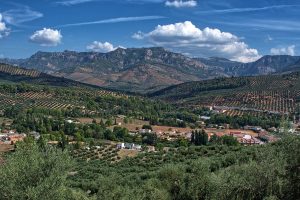
In the heart of the province of Jaén, between mountains, valleys and places of exceptional natural beauty, stands a unique project that fuses agriculture, sustainability, culture and tourism: Olive Time. More than an olive oil project, it is an invitation to stop the clock, to walk among centuries-old olive trees, to listen to the whisper of the wind through the branches and to rediscover the value of a thousand-year-old landscape. In this post we propose an in-depth tour of this initiative: its origin, objectives, activities, challenges and why it deserves a place on your route through the Sierra de Cazorla.
1. Introduction: the magic of the olive grove as a living heritage
When we think of Jaén, infinite horizons of olive trees immediately come to mind. They are more than cultivated trees: they are cultural, botanical, historical, landscape symbols. But what happens when that landscape is looked at through the eyes of tourism, culture, sustainability? Here appears Tiempo de Olivos, a cooperation project that seeks to value that living heritage and transform it into an experience.
The olive grove does not only produce oil: it produces identity, ecosystems, stories. And Tiempo de Olivos works precisely that: to make the olive grove not only an agricultural exploitation, but an engine of rural development, a sensory experience, an environmental education.
2. What is Olive Time?
2.1 Origin and territorial scope
The Tiempo de Olivos project was born with a cooperative ambition: to improve the sustainability (environmental, social and economic) of the olive oil sector in the regions of Jaén, especially in rural areas, including the Sierra de Cazorla.
It is part of the idea that the classic olive grove – with its contemporary challenges – can be reinvented towards a more balanced model: one that protects the landscape, conserves biodiversity, empowers local communities and provides added value.
The regions involved cover territories such as Campiña Norte, El Condado, Sierra de Cazorla, among others.
2.2 Main objectives
Some of the objectives that guide Tiempo de Olivos are:
-
Improve the sustainability of the olive oil sector: reduce environmental impact, promote more respectful practices, promote diversification.
-
Strengthen the local social and economic fabric: that small producers benefit from the project, local opportunities are generated, and rural depopulation is stopped.
-
Position oleotourism as a complementary activity: transform the olive landscape into a tourist, cultural and educational resource.
-
Raise awareness and communicate: bring visitors closer to the reality of olive groves, their ecological value, their challenges in the 21st century.
Overall, he aims to ensure that the traditional olive grove does not remain as a relic, but evolves towards a more viable model for the 21st century.
3. Why integrate Tiempo de Olivos into your route through Sierra de Cazorla?
If you are already planning to visit Sierra de Cazorla, this project provides a unique ingredient that can make your trip something special. Here are some arguments:
3.1 Tourism with deep roots
The Sierra de Cazorla offers nature, trails, viewpoints, charming villages… But few projects so intimately integrate the olive grove, the agricultural landscape and the living heritage. Olive Time allows you to see the countryside as more than just a “landscape background”: you will walk among the olive trees, learn from them, capture their landscape with another sense.
3.2 Connection with culture, identity and memory
The olive tree is part of the Andalusian rural memory: family traditions, inherited techniques, myths, culinary uses. Through this project you can connect with that ethnographic dimension: talk to farmers, listen to local stories, see traditional and modern techniques, appreciate the contrast between the ancestral and the contemporary.
3.3 Environmental education and awareness raising
Tiempo de Olivos invites us to reflect: how to reconcile production and nature? How to face the challenges of climate change? What role does tourism play in rural areas? These questions take concrete form when you are walking among the branches, next to a farmer, observing insects, listening to the wind.
3.4 Sensory experiences
Visuality, aromas, touch: an olive grove offers many sensory dimensions. When the sun illuminates the leaves, when the wind shakes the branches, when the aroma of the fruit is perceived… It is an attractive setting for photographers, nature lovers, slow travelers, curious people.
3.5 Strengthening rural tourism
Integrating Tiempo de Olivos into the Sierra de Cazorla circuit contributes to diversifying the tourist offer: not only hiking, nature or historical heritage, but also experiences in the agricultural territory. And that offers more opportunities for rural accommodation, local guides, complementary initiatives.
4. What to do with Olive Time: activities and proposed routes
Although the detailed information of all the experiences is subject to programming, here are some typical activities that the project proposes, or that can be well integrated into a tourist route:
4.1 Guided tours among olive groves
Walking or cycling tours among centuries-old olive groves, accompanied by local guides or experts, explaining the varieties of olive trees, their history, their management, the associated ecosystems. You can stop at viewpoints, photographic points, interpretation spaces.
4.2 Workshops and practical experiences
-
Pruning, grafting, olive tree care workshops.
-
Oil tastings, guided tastings, local pairings.
-
Oleotourism workshops (how to design an experience), environmental education.
-
Activities for families: activities for children, identification games, adapted interpretive routes.
4.3 Photography and art in the olive grove
The landscape of the olive grove, especially at sunrise or sunset, is a magnet for photographers and artists. Tiempo de Olivos can facilitate special routes, photo stations, creative workshops on site.
4.4 Cultural and gastronomic events
Tastings, local oil fairs, open days, meetings between producers and travelers, literary or musical presentations in olive-growing places.
4.5 Integration with other attractions in Sierra de Cazorla
You can combine olive groves with natural routes, visits to waterfalls, natural park trails, charming villages, local gastronomy. For example, starting the day with a walk through the mountains, and in the afternoon ending among olive trees, discovering another face of the territory.
5. Project Challenges and Challenges
No initiative that aspires to be transformative has it easy. These are some of the challenges that Tiempo de Olivos must face, and also those that a committed tourist can appreciate and value:
5.1 Balance between tourism and conservation
There is always the risk that unsustainable tourism will alter the landscape, affect fauna, cause erosion or wear and tear. The key is to design low-impact routes, limit capacity, train respectful guides, and provide environmental control.
5.2 Institutional support and local collaboration
For such an initiative to prosper, it needs administrative support, funds and commitment from local actors: farmers, town councils, associations, rural tourism entities. Without that, it can remain a symbolic project.
5.3 Real profitability for farmers
That the project is not only a tourist showcase, but that it brings real income to the local farmer: fair payments, associations, active participation. If farmers do not feel benefited, it will be difficult for them to sustain the project.
5.4 Climate change and adversities
The olive tree, although adapted to the Mediterranean climate, also suffers stress: droughts, pests, variability, water pressure. Promoting agroecological practices, fostering resilient varieties, and diversifying is essential.
5.5 Communication, promotion and visibility
Turning the project into a benchmark destination requires a communication strategy: social networks, collaborations with influencers or tourism media, specialised press, alliances with tourism portals.
6. Success stories or parallel inspiration
To better understand the potential of projects like Tiempo de Olivos, it’s worth looking at similar or inspiring examples:
-
Oleotourism initiatives in other Andalusian provinces, where visitors visit oil mills, taste oils, participate in the harvest.
-
“Adopt an olive tree” in other regions: programs that allow people to “adopt” an olive tree, receive its oil, follow its evolution, and support its maintenance (this type of initiative has been promoted in Aragon for example). (See news: a similar project “made in France” works with centenary olive trees and sells oil in Germany)
-
Agricultural tourism projects in olive groves in Italy, Greece, where rural tourism is combined with experience linked to cultivation.
These examples show that there is a demand for tourists looking for authentic experiences, linked to the territory and agricultural culture.
7. Suggested itinerary: “A day between olive trees and mountains”
Here is a typical route that you could offer to visitors interested in including Olive Time in their trip through Sierra de Cazorla:
Morning
-
Early departure from one of the base points of the Sierra (Cazorla, Iruela, La Iruela or nearby town).
-
Hike along a natural trail in the park, enjoying mountainous scenery, flora and fauna.
-
Stop for a traditional lunch in one of the mountain villages.
Midday / Afternoon
-
Transfer to the olive grove area where a guided route is made among the ancient olive trees, with interpretation of the olive landscape.
-
Stop for tasting of local oil, pairings with local products.
-
Light workshop (e.g. identification of varieties, demonstration of pruning or other olive tree work).
-
Free time for photography, contemplation, breathing among the branches.
At sunset
-
End of the experience with a special moment: picnic among the olive trees, small acoustic concert, narration of local stories, etc.
-
Return to the accommodation or rural establishment.
This route can be adapted to several hours or become a two-day experience if combined with accommodation in estates, theme nights, etc.
8. How to promote it from Sierra Cazorla Tourism
For this experience to be recognized and demanded by travelers, from your portal you can:
-
Create an experience sheet: Describe in detail the Tiempo de Olivos experience, with schedules, rates, what it includes, images, recommendations, reservations (direct link).
-
Attractive visual content: Use evocative photographs, short videos (timelapses, sunrises among olive groves) and short interviews with local producers.
-
Traveler stories: Encourage those who make the experience to leave reviews, photos, stories that you can share.
-
Combined tourist packages: Combine the experience with rural accommodation, routes through the natural park, local gastronomy, cultural visits.
-
Collaborations: With agricultural associations, oil cooperatives, town councils, local guides, schools.
-
Dissemination in networks and specialized press: Publish articles, press releases, blog posts like this one, very visual posts.
-
Audience segmentation: Aim at both the cultural tourist, the slow traveler, the nature lover, and the gourmet traveler interested in oil.
9. Possible expected impacts (and how to measure them)
To assess the success of the project and its effect on the territory, some expected metrics and impacts can be considered:
-
Number of visitors participating in project experiences.
-
Direct income generated by tourist activities linked to the olive grove.
-
Percentage of local farmers involved and benefited economically.
-
Visitor perception (satisfaction surveys, reviews).
-
Environmental impact: if the routes maintain low impact, if they favor biodiversity (for example, increase in fauna or associated vegetation).
-
Media dissemination, mentions in the press and networks.
-
Increase in rural tourism in municipalities or adjacent areas.
A periodic evaluation will help to adjust routes, schedules, approaches.
10. Local testimonies and stories (suggestions to collect)
Although the project’s website does not yet include multiple testimonies, it would be very enriching to incorporate local voices such as:
-
Farmers who have worked with olive trees for generations, explaining how they have seen the change in the sector.
-
Young people who choose to stay in the rural world and take advantage of these initiatives.
-
Visitors who have already participated in pilot routes (stories about what they felt).
-
Researchers or technicians involved who narrate technical decisions and challenges.
These voices bring authenticity, emotion and closeness.
11. Final Reflection: The Olive Grove as a Bridge Between Past and Future
Tiempo de Olivos is much more than an agricultural or tourist project: it is a bridge between the traditional and the innovative, between the rural landscape and the contemporary experience. When the traveler crosses a path of ancient olive trees, he sees the scars of time, the twisted branches, he hears the wind among the leaves, he is treading on a land that has fed generations. If that experience is enriched with context, with interpretation, with environmental awareness, it becomes tourism with meaning.
In the Sierra de Cazorla, where the mountains, water, mountain villages and nature combine, adding the olive grove as an experience contributes to a more diverse, robust and authentic offer. Tiempo de Olivos can be a differential axis: an incentive to extend stays, to attract curious travelers, to strengthen the local identity.
We invite you to include this experience among your tours of Sierra Cazorla. To walk among centenary olive trees. To listen to invisible stories. To breathe a living landscape. To make tourism something that nourishes not only the pocket, but also the soul of the territory.